
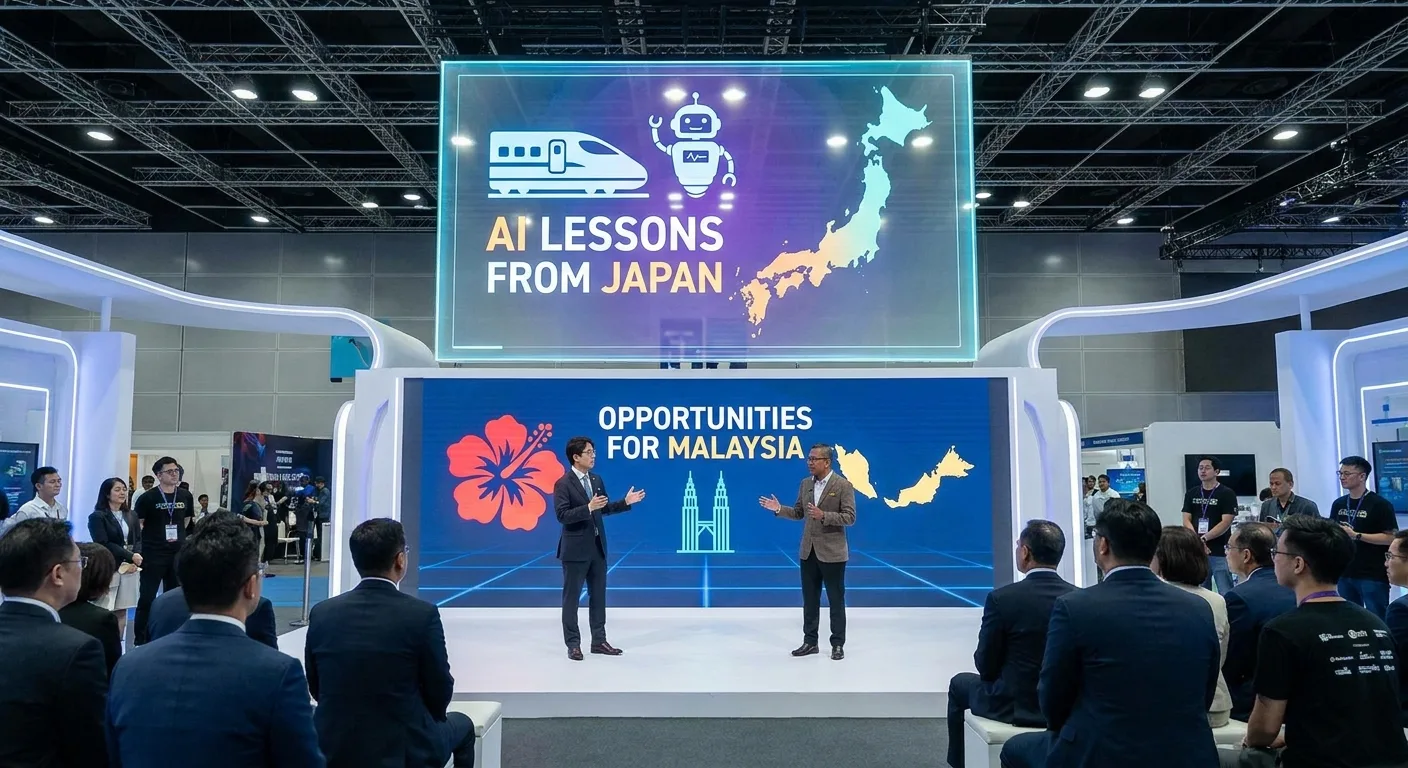
AI Lessons from Japan, Opportunities for Malaysia
Picture a high-tech lab. You might imagine engineers building robots or programmers coding complex software. But what if the focus of this advanced research was a toilet bowl? Or perhaps a bottle of seasoning? This isn’t science fiction; it’s the reality in Japan, where some of the most traditional companies are becoming surprising leaders in artificial intelligence. Far from the world of tech start-ups, these established firms are using AI to redefine their industries. This quiet revolution offers powerful lessons for us here in Malaysia. It shows that AI isn’t just for tech giants and that incredible **opportunities** exist for any business willing to think differently about the tools of the future.

Japan’s Unexpected AI Innovators
When you think of Japanese industry, names like Toyota or Sony probably come to mind. But the new wave of AI adoption is happening in less expected corners. Take Toto, a world-renowned toilet manufacturer. The company has been developing AI-powered toilets that can analyse human waste to provide health insights, effectively turning a bathroom fixture into a wellness device. Similarly, Ajinomoto, the famous seasoning producer, is using AI to analyse vast amounts of data on amino acids and consumer taste preferences. This allows them to create new flavour combinations and optimise their fermentation processes with a level of precision previously thought impossible. These examples show that AI’s potential isn’t confined to a single sector; its power lies in its application to solve specific, real-world problems.
Applying AI Beyond the Obvious
The success of these Japanese companies comes from a simple but powerful shift in thinking. They are not using AI for its own sake; they are using it as a tool to enhance what they already do best. For Toto, it was about adding a new dimension of value—health monitoring—to their core product. For Ajinomoto, it was about refining their research and production to create better products more efficiently. The lesson for Malaysian businesses is clear: an AI strategy doesn’t mean you have to become a tech company. Instead, it’s about looking at your current operations—be it in manufacturing, agriculture, retail, or services—and asking, “Which part of this process could be made smarter, faster, or more efficient with data?”

Lessons for Malaysian Businesses
As Malaysia pushes forward with its national agenda for **digitalization**, the time is right for local businesses to take inspiration from these examples. Many Malaysian small and medium-sized enterprises (SMEs) might feel that AI is out of reach, imagining it requires huge teams of data scientists and massive investment. However, the landscape of **technological advancements** is making AI more accessible than ever. Cloud-based AI services and specialised software can be implemented on a smaller scale to tackle specific challenges. Whether it’s an agricultural firm using AI-powered drones to monitor crop health or a retail business using AI to predict inventory needs, the entry points are becoming more numerous and affordable. The key is to start small, focus on a clear problem, and build from there.
The Competitive Edge of Smart Innovation
In today’s competitive market, efficiency and productivity are everything. Implementing AI can deliver a significant advantage in these areas. For a manufacturer, AI can predict when machinery needs maintenance, preventing costly breakdowns. For a logistics company, it can optimise delivery routes in real-time, saving fuel and time. This isn’t just about cutting costs; it’s about building a more resilient and agile business. By embracing such **technological advancements**, companies can free up their human workforce from repetitive tasks and empower them to focus on more creative, strategic initiatives. This fosters a culture of innovation that is essential for long-term growth and profitability.

Embracing Malaysia’s AI Future
The journey of companies like Toto and Ajinomoto proves that artificial intelligence is a flexible and powerful tool for any industry. For Malaysian entrepreneurs and business leaders, the message is one of encouragement, not intimidation. You don’t need to be a technology expert to begin exploring what AI can do for your business. The journey starts with curiosity and a willingness to look at old problems with new eyes. By embracing the ongoing wave of **digitalization** and staying open to new solutions, we can unlock immense potential within our own industries. The **opportunities** are there for the taking, and it is up to us to create Malaysia’s own generation of unexpected AI success stories.