
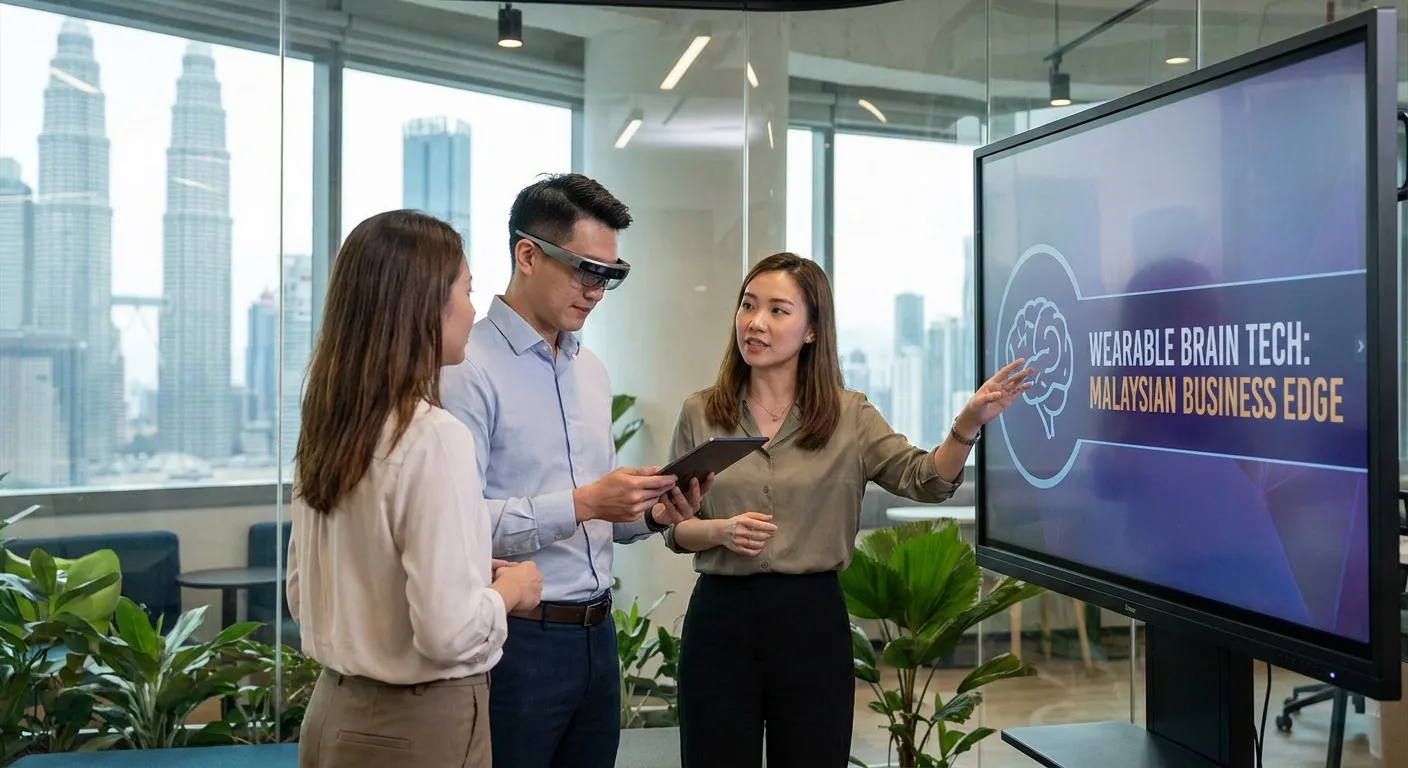
Wearable Brain Tech: The New Edge for Malaysian Business
Imagine knowing precisely how a customer feels about your new product, not from a survey, but from their genuine, unfiltered reaction. Picture your team achieving a state of deep focus exactly when it’s needed most. This isn’t a scene from a futuristic film; it’s the reality taking shape with the rise of brain-computer interface technology. While the concept might sound complex, its wearable applications are becoming increasingly practical and accessible. For forward-thinking companies, this represents a new frontier of opportunity. At our core, we believe in exploring advancements that can redefine success, and this technology is undoubtedly one of them. We will journey through what this means for the modern workplace and how it could reshape the Malaysian business landscape.
The Mind as the New Interface
For years, the idea of controlling computers with our minds has been the stuff of science fiction. Today, it’s a rapidly growing field translating brain signals into actionable data or commands. Instead of bulky lab equipment, we are now seeing sleek, user-friendly devices like headbands and earbuds. These tools don’t read your thoughts. Instead, they typically use sensors to measure electrical activity in the brain, much like a heart rate monitor measures your pulse. This data can then reveal states like focus, relaxation, or engagement. The key takeaway for businesses is that this technology has left the laboratory and is entering the world of practical, everyday applications, creating tangible opportunities for innovation and growth.

A Deeper Connection with Your Customers
Traditional market research relies on what customers tell us, which can be influenced by many factors. What if you could understand their subconscious responses? This is where neuromarketing, powered by wearable electroencephalography (EEG) devices, comes in. Businesses can now measure a consumer’s authentic emotional and attention-based reactions to an advertisement, a website layout, or even product packaging. Imagine a property developer in Kuala Lumpur showing a virtual tour of a new condominium. With this technology, they could see which features genuinely excite potential buyers and which parts cause their attention to drift. This provides an incredibly honest layer of feedback, allowing companies to fine-tune their offerings with a level of precision that was previously impossible.
Unlocking Workforce Potential and Well-being
A company’s greatest asset is its people. Enhancing their productivity and, just as importantly, their well-being is a top priority. Companies like China’s BrainCo are already creating solutions in this space. They offer devices designed to help individuals train their ability to focus through neurofeedback. For Malaysian businesses, this could mean offering tools that help employees manage distractions in an open-plan office or maintain concentration during complex tasks. Beyond just productivity, this technology can also be used to monitor cognitive load. By understanding when a team member is mentally overworked, managers can intervene before burnout occurs, fostering a healthier and more sustainable work environment. It’s about empowering your team to perform at their best, supported by technology that understands their cognitive needs.

Gaining a Strategic Advantage in a Digital Malaysia
As Malaysia continues its journey towards a fully digital economy, staying ahead of the curve is essential. Adopting emerging technologies is no longer just an option; it’s a strategic necessity. Embracing wearable brain tech can provide a significant competitive edge. Companies that explore its potential early will be better positioned to create more engaging customer experiences and build more efficient, focused teams. Whether it’s in the manufacturing sector to monitor operator alertness for safety, in the tech industry to design more intuitive user interfaces, or in education to create personalised learning programmes, the applications are vast. This isn’t about a complete overhaul overnight but about future-proofing your organisation by understanding and preparing for the next wave of human-computer interaction.
Your First Steps into the Future
Venturing into the world of a brain-computer interface might seem intimidating, but the journey can begin with simple, strategic steps. The first is education—encouraging your leadership and innovation teams to learn about the current state of the technology and its potential applications in your industry. Consider launching a small pilot programme. Your marketing department could experiment with a neuromarketing study for an upcoming campaign, or your HR department could explore focus-training wearables as part of a wellness initiative. Partnering with local universities or tech startups can also provide valuable expertise and resources. The goal is to start building internal knowledge and experience, treating this technology as a powerful new tool in your arsenal, not a replacement for human expertise.
Conclusion
The bridge between the human brain and the digital world is being built, and wearable technology is making it more accessible than ever. We’ve seen how it promises to create deeper customer insights, unlock new levels of employee productivity and well-being, and provide a real strategic advantage. For the Malaysian business landscape, this represents a unique opportunity to lead and innovate rather than follow. The conversation is shifting from “what if” to “how and when.” While we are still in the early days of this technological revolution, the implications are profound. Now is the time for businesses to start paying attention, to explore the possibilities, and to begin planning for a future where understanding the mind is key to winning in the marketplace.